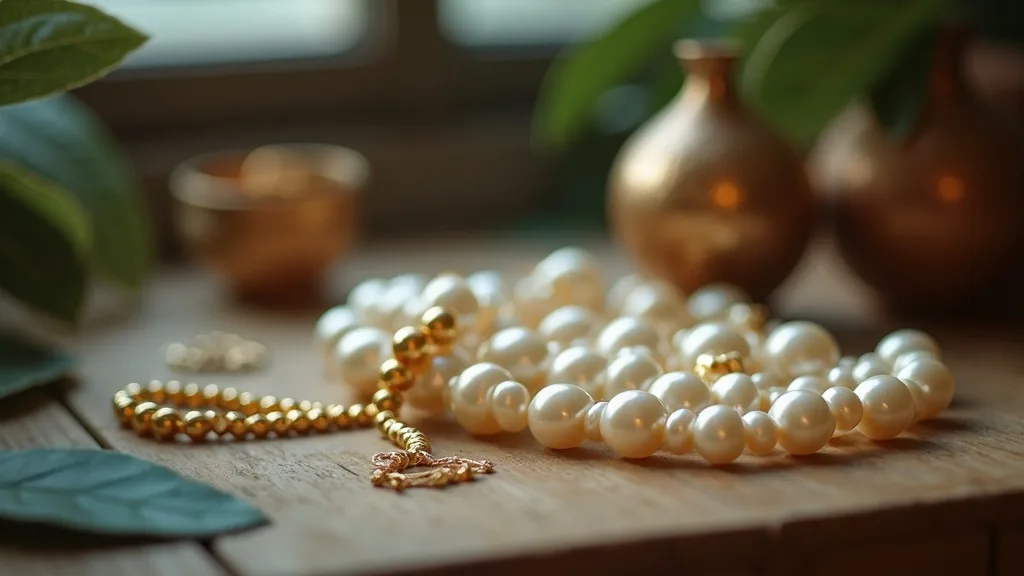
Authentic Bali pearl jewelry means pearls cultured from the Pinctada maxima oyster in Indonesian South Sea waters — Bali’s north-coast farms and Lombok’s — sold with per-piece inspection notes, disclosed color treatment, and export paperwork that matches the invoice. Authenticity here is documented, not claimed: grades come from inspection or accompanying certificates, never from a label alone.
The label “Bali pearl” gets attached to plenty of jewelry that never touched Indonesian water. Here is what authentic means in this trade, and how to verify it before paying.
What Makes Bali Pearl Jewelry Authentic?
Four conditions, all verifiable, and all four must hold at once.
- South Sea origin from Pinctada maxima. The only oyster that produces true South Sea pearls. One industry source puts Indonesia at roughly 45% of global South Sea pearl production — around USD 500 million as of 2014 — much of it exported loose.
- A named Indonesian growing region. Bali production sits in Buleleng, Karangasem, and Negara districts, with farms near Menjangan on the northern tip — nowhere near Kuta. Lombok and Sumbawa supply much of the loose stock; Sekarbela in Lombok is the recognized trade center.
- Per-piece inspection notes. Luster, nacre, surface, shape, size in millimeters, and gram weight — written for the specific pearl you are buying, not copied from a generic chart.
- Written color disclosure. Natural Indonesian and Australian goldens tend toward light champagne tones; Philippine goldens reach deeper mustard saturation. A deeply saturated gold offered without a treatment disclosure is telling you something.
A strand of Chinese freshwater rounds mounted in Bali silver can be attractive jewelry. It is not authentic Bali pearl jewelry, and it should not be priced like it.
How Do You Verify a Pearl Before Paying?
Run these checks before money moves; all of them work remotely over video, which is how most wholesale buyers deal with us.
| Check | What authentic looks like | Red flag |
|---|---|---|
| Species and water | Pinctada maxima, South Sea, farm region named | “South Sea style” or no water source given |
| Golden color | Champagne-toned, treatment status in writing | Deep saturated gold, no disclosure offered |
| Drill hole | Clean nacre layers, no color concentration | Dye ring or color bleeding inside the hole |
| Pricing basis | Quoted per gram or per piece against grade and size | One flat price across mixed sizes and grades |
| Grading | From inspection notes or a genuine accompanying certificate | “AAA” claimed with nothing behind it |
| Paperwork | Invoice, inspection notes, export documents on request | A “certificate” from a lab you cannot look up |
Dye concentrates at the drill hole, so a macro video of the hole is the fastest treated-color check short of a lab. And since Lombok loose South Sea pearls commonly trade around IDR 100,000–500,000 per gram, a strand quoted without gram weight is hiding the arithmetic.
On lab reports our position is simple: we never issue lab-style certificates and never claim a report that does not exist. Where a genuine certificate accompanies a piece, you get it; where none does, the grade stands on written inspection notes, and you may commission an independent test before payment.
What Documentation Travels With Each Piece?
Export paperwork is itself an authenticity test: a seller who cannot produce it is not exporting legally. As of 2026 — subject to regulatory change — an Indonesian pearl export moves with:
- Export approval (persetujuan ekspor) under a Ministerial Regulation of the Ministry of Marine Affairs and Fisheries (KKP).
- Quality Certificate (Sertifikat Mutu) for the shipment.
- Health Certificate from BKIPM Mataram, which physically inspects every Lombok pearl shipment — domestic and export — after online shipment reporting.
- Commercial invoice and packing list declaring cultured pearls under HS code 7101210000 (unworked) or 7101220000 (worked), with values matching what you actually paid.
- Certificate of Origin issued via the trade ministry where your destination market requires it.
Pearls themselves are not CITES-listed, so no KLHK wildlife permit applies — though corals and protected shells used in mixed jewelry do need one. The volume behind this paperwork is real: cultivated pearl shipments from Lombok’s waters passed IDR 507.9 billion in 2023 according to regional fisheries figures — more than double the 2022 total — bound for Hong Kong, Japan, Australia, the United States, and over twenty more markets.
What Do Authentic Bali Pearls Cost in 2026?
Pricing is quote-based per grade and size; the figures below are indicative as of 2026, and the written quotation confirms. Across the wider Indonesian market, studies report IDR 100,000 up to IDR 5,000,000 per gram depending on type and grade.
| Option | Typical size | Indicative range (as of 2026) | Basis |
|---|---|---|---|
| Loose South Sea, commercial grades | 8–10 mm | IDR 100,000–250,000 per gram | Per gram, after inspection |
| Loose South Sea, fine luster | 10–13 mm | IDR 250,000–500,000 per gram | Per gram, after inspection |
| Single statement pearls | 13 mm and up | USD 2–7,500 per piece | Per piece, graded individually |
| Finished pendant or ring | 9–12 mm pearl | Quoted: pearl grade plus metal and work | Written quotation |
| Wholesale lots and OEM runs | Mixed | Quoted per lot after joint inspection | Written quotation |
Price moves on luster, nacre thickness, surface, size, shape, and color. AAA/AA/A charts are trade conventions, not government standards — which is why the inspection note, not the letter grade, protects you.
How Does Ordering a Documented Piece Work?
- Send your requirement — size range, color, grade expectation, quantity, and destination country — to the BD desk by WhatsApp or email.
- Receive a shortlist with per-piece inspection notes, gram weights, and macro photos or video.
- Inspect live on video call, commissioning an independent lab test now if you want one.
- Get a written quotation per grade and size. The quotation, not this page, fixes the price.
- Approve the document draft — invoice, packing list, HS code, any Certificate of Origin — then pay.
- Receive the BKIPM-inspected shipment with its Health Certificate, Sertifikat Mutu, and origin paperwork attached.
> Request documented pieces. Tell the BD desk your size, color, and destination market, and you will get inspection notes and a written quotation rather than a sales pitch. WhatsApp +62 811-3941-4563 or email [bd@juaraholding.com](mailto:bd@juaraholding.com). Bali Pearl Jewelry is part of Juara Holding Group — an Indonesian group operating from Bali across Indonesia since 2015.
Frequently Asked Questions
How can I tell if Bali pearl jewelry is authentic South Sea pearl?
Confirm species and water first: authentic pieces come from Pinctada maxima grown in Indonesian South Sea farms, with the region named — Buleleng, Karangasem, or Negara in Bali, or Lombok’s waters. Then ask for per-piece inspection notes, a drill-hole macro video, and gram-based pricing. A seller who refuses any of these has answered your question.
Do authentic Bali pearls come with GIA certificates?
Not usually. Most loose Indonesian South Sea pearls trade on written inspection notes, and a GIA or similar report exists only when a piece has genuinely been tested. We never fabricate lab documents; where no certificate accompanies a pearl, the grade rests on inspection, and you may commission an independent test before paying.
What export documents prove a Bali pearl shipment is legitimate?
As of 2026, a legitimate export carries KKP export approval, a Sertifikat Mutu quality certificate, and a Health Certificate issued after physical inspection by BKIPM Mataram, plus an invoice under HS code 7101210000 (unworked) or 7101220000 (worked). A Certificate of Origin is added where the destination market requires it.
Are golden Bali pearls dyed?
Some golden pearls in the wider market are color-treated, which is why written disclosure matters. Natural Indonesian and Australian goldens tend toward light champagne tones; Philippine goldens reach deeper mustard saturation. A very deep gold at a champagne-tone price warrants a drill-hole check and a direct treatment question before you pay.
Why do prices for authentic Bali pearl jewelry vary so widely?
Because each pearl is priced individually on luster, nacre thickness, surface, size, shape, and color. Indonesian market studies as of 2026 report IDR 100,000 to IDR 5,000,000 per gram across types and grades, and single pearls from USD 2 to USD 7,500 apiece. Grade letters are trade conventions; the inspection note behind each price is what counts.