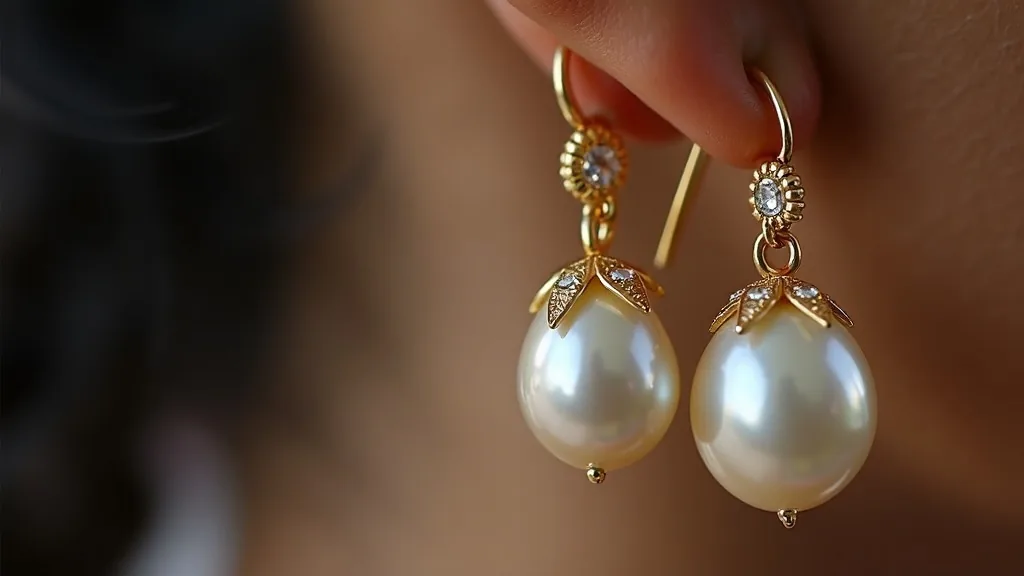
As of 2026, Bali pearl earrings are quoted per pair, per grade, and per size — never from a fixed retail list. Indicative ranges: USD 90–260 for 8–9 mm South Sea studs in sterling silver, USD 480–1,200 for 10–11 mm pairs in 18k gold, and USD 3,000+ for fine-matched 13 mm golden drops; a written quotation confirms every figure.
The pearls behind those numbers come from Pinctada maxima, the South Sea oyster farmed across Lombok, Sumbawa, and Bali’s northern districts of Buleleng and Karangasem. Earrings are the most match-sensitive pearl category there is: two pearls must agree on size, shape, luster, and overtone before a jeweler will pair them, and that agreement — more than the metal — is what drives the price.
What Do Bali Pearl Earrings Cost in 2026?
Per-pair pricing follows the pearls, not the design. A single Indonesian South Sea pearl ranges from USD 2 to USD 7,500 per piece at one Indonesian producer, and Lombok loose pearls commonly trade around IDR 100,000–500,000 per gram, so the spread between a commercial stud pair and a gem-grade drop pair is enormous. The brackets below show the Bali pearl earrings price picture from the export desk as of 2026; your written quotation confirms the final number per pair.
| Pearl size (per pearl) | Sterling silver studs | 18k gold studs | 18k gold drops |
|---|---|---|---|
| 8–9 mm white | USD 90–260 | USD 220–480 | USD 320–650 |
| 9–10 mm white | USD 140–380 | USD 300–680 | USD 420–950 |
| 10–11 mm white or golden | USD 260–700 | USD 480–1,200 | USD 650–1,600 |
| 11–12 mm golden | USD 420–1,100 | USD 750–1,900 | USD 950–2,400 |
| 12–13 mm+ fine golden | USD 700–2,400 | USD 1,300–3,800 | USD 1,700–4,500+ |
Three notes on reading the table. First, ranges overlap because grade beats size: a 9 mm pair with mirror luster and clean surfaces can out-price a dull 11 mm pair. Second, color moves money — Indonesian goldens tend toward light champagne tones, and deeper saturation commands more within the same size bracket. Third, these are export-desk figures drawn from Lombok and Bali stock, not boutique retail; Sekarbela in Lombok, the island’s recognized pearl trade center, works on the same wholesale logic.
Grades themselves come from physical inspection or accompanying certificates, never assumption. AAA/AA/A charts are trade conventions rather than government standards, which is why we grade each pair under neutral light and put the result in writing before quoting.
Why Do Matched Pairs Cost More Than Two Single Pearls?
Because matching consumes inventory. To find two 11 mm goldens that agree on tone, luster, and shape, a supplier may sort through dozens of singles — harvests do not produce twins on demand. The tighter the match, the higher the premium over the sum of two comparable singles:
- Commercial match (variance visible at arm’s length): baseline pair price
- Standard match (minor variance under a jeweler’s light): +10–20%
- Fine match (near-identical size, overtone, and luster): +25–40%
- Collection match (13 mm+, effectively mirror pearls): +50% or negotiated per pair
This is also why serious buyers ask to see both pearls photographed together under one light source before agreeing on a price — and why we send video, not just stills, during the quote process.
Studs or Drops: Which Style Costs More?
Drops cost more at the same pearl size, usually by 15–40%. A stud is a pearl, a peg, and a backing; a drop adds hooks or lever-backs, connecting elements, and often accent metalwork — more gold, more labor, more design time.
Drops also favor drop-shaped and baroque pearls, which can pull the price down at equal millimeter size, since round carries the shape premium. A baroque golden drop pair can undercut a round stud pair of the same size while looking larger on the ear — a quiet advantage for buyers chasing presence over roundness.
How Much Does 18k Gold Add Over Sterling Silver?
As of 2026, moving the same pearl pair from sterling silver to 18k gold typically adds USD 130–400 for studs and more for drops, depending on gram weight and gold’s spot price on the quotation date. Sterling keeps entry pairs accessible; 18k is the standard setting for 10 mm+ goldens, where the pearl justifies the metal.
We quote both metals on request. The pearls are priced identically either way, so the setting appears as its own transparent line on the quotation.
How Does an Earring Quote Work?
Every pair moves through the same five steps:
- Send your brief. Size range, color (white, champagne, deeper golden), studs or drops, metal, and quantity — one pair or a wholesale run — via WhatsApp or email.
- Receive candidate pairs. We shortlist from current Lombok and Bali stock and send photos plus video of each pair together under neutral light.
- Review the grading. Luster, surface, nacre, shape, and match quality, from physical inspection and any accompanying certificates — disclosed in writing, never assumed.
- Confirm the written quotation. Price per pair with validity dates; export orders include incoterms and full documentation. Cultured pearls clear under HS codes 7101210000 (unworked) and 7101220000 (worked), and BKIPM Mataram physically inspects Lombok shipments and issues a Health Certificate before dispatch.
- Pay and ship. Insured courier with complete paperwork; wholesale buyers can consolidate finished pairs with loose-pearl orders in one shipment.
Lombok’s export pipeline handles this at scale: provincial figures put cultivated pearl shipments from Lombok’s waters above IDR 507.9 billion in 2023, with over IDR 430.5 billion exported to Hong Kong, Japan, Australia, the United States, and more than twenty other markets.
Buying earrings and a strand together? See our Bali pearl necklace price guide — sets are quoted as one package, and matching new earrings to an existing strand is its own matching job worth pricing properly.
Request a Matched-Pair Quote
Tell the BD desk your target size, color, and metal, and you’ll receive graded candidate pairs with a written quotation, usually within one working day.
- WhatsApp: +62 811-3941-4563
- Email: bd@juaraholding.com
Bali Pearl Jewelry is part of Juara Holding Group — an Indonesian group operating from Bali across Indonesia since 2015. All prices on this page are indicative as of 2026 and subject to stock and market movement; only a written quotation confirms them.
Frequently Asked Questions
Why is a matched pair more expensive than two single pearls of the same size?
Because pairing is a sorting cost. A supplier may inspect dozens of singles to find two that agree on size, luster, overtone, and shape, and every tightened tolerance shrinks the usable pool. As of 2026, expect a 10–40% premium over two comparable singles, rising past 50% for mirror-matched pairs above 13 mm.
How much do golden South Sea pearl earrings cost compared with white?
Goldens generally quote higher at the same size and grade, with deeper saturation carrying the largest premiums. Indonesian goldens run toward light champagne tones; as of 2026, indicative pairs move from around USD 480 for 10–11 mm champagne studs in 18k gold to USD 3,800+ for fine 12–13 mm pairs. A written quotation confirms.
Is it cheaper to buy loose pearls in Lombok and set them as earrings myself?
Sometimes. Lombok loose South Sea pearls commonly trade around IDR 100,000–500,000 per gram as of 2026, and Sekarbela’s trade benches can set them locally. But you carry the matching risk: two loose pearls that look close in a shop rarely agree under a jeweler’s light. Export buyers usually save more negotiating finished pairs per grade.
What should a written quote for pearl earrings include?
Per-pair price with validity dates, pearl size and shape, color and overtone, luster and surface grading from inspection or accompanying certificates, nacre notes, metal specification with gram weight, and — for export orders — incoterms, HS code, and documentation such as the BKIPM Health Certificate. If a quote skips the grading detail, ask before paying.