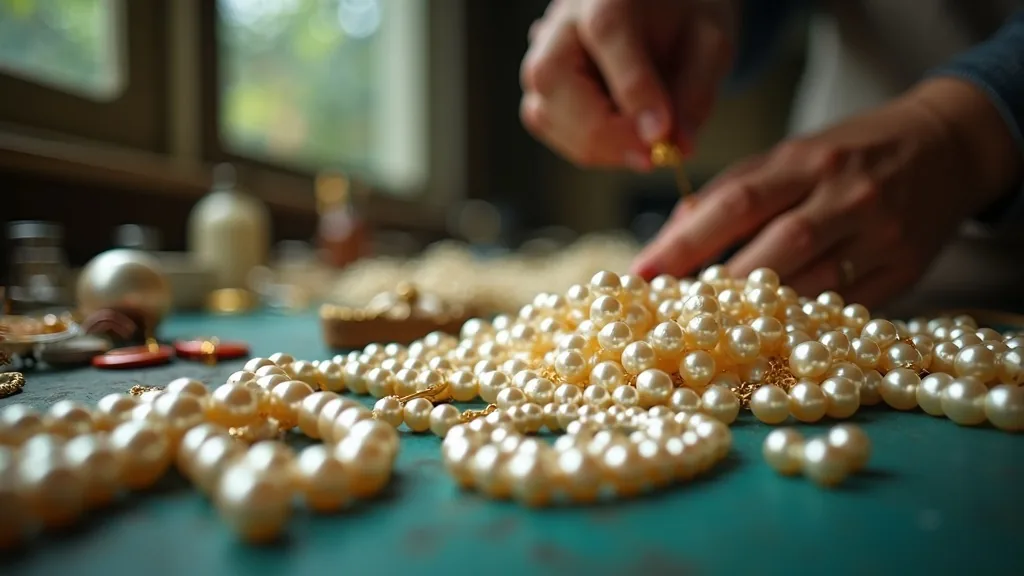
Bali Pearl Jewelry is an Indonesian South Sea and golden pearl export desk operated by Juara Holding Group. We source loose pearls and finished jewelry from farms in Lombok, Sumbawa, and northern Bali, grade every lot in-house against physical inspection or accompanying certificates, and ship worldwide to two kinds of buyers: retail visitors and B2B importers.
Part of Juara Holding Group — an Indonesian group operating from Bali across Indonesia since 2015. This page explains what the desk does, where the pearls come from, how grading works, and what an order looks like.
Who runs Bali Pearl Jewelry?
Bali Pearl Jewelry is the pearl export desk of Juara Holding Group. We do not own the farms. We buy from established growers in West Nusa Tenggara and northern Bali and from finishing workshops in Sekarbela — Lombok’s recognized pearl retail and trade quarter — then grade, document, and export under our own quality process.
That separation matters. Because we are not selling our own harvest, we have no reason to overstate a lot’s grade. Our margin comes from sourcing accurately for the buyer in front of us, not from moving whatever inventory a farm needs to clear.
Where do the pearls come from?
Every South Sea pearl we handle comes from Pinctada maxima, the large gold-lip and silver-lip oyster farmed across eastern Indonesia. Indonesia is a leading producer of loose South Sea pearls — one industry source put the country at roughly 45% of global South Sea pearl production, worth around USD 500 million or about 40% of global production value as of 2014, with a large share exported loose rather than as finished jewelry.
| Region | What it supplies | Notes |
|---|---|---|
| West Nusa Tenggara (Lombok and Sumbawa) | Loose South Sea pearls, white through golden | Sekarbela in Mataram is the retail and trade hub |
| Bali — Buleleng, Karangasem, Negara | Farm-direct lots | Farms near Menjangan sit at Bali’s northern tip, far from Kuta and Denpasar |
| West Papua (Raja Ampat) | Occasional golden parcels | Sourced through partner traders, not on-site |
Color is a sourcing decision, not an accident. Indonesian and Australian golden South Sea pearls tend toward light champagne tones, while Philippine goldens reach deeper mustard saturation — so when a buyer asks for deep gold, we say plainly what Indonesian farms can and cannot deliver, and quote accordingly.
Why does an export desk matter in this market?
Because the trade is growing fast and the paperwork is heavy. Cultivated pearl shipments from Lombok’s waters exceeded IDR 507.9 billion in 2023 — exports over IDR 430.5 billion plus domestic shipments over IDR 77.4 billion — up from IDR 209.2 billion total in 2022, according to regional shipment figures. Buyers that year included Hong Kong, Japan, Australia, China, Thailand, the United States, India, Switzerland, Singapore, the UAE, and over twenty more markets.
The paperwork behind those numbers is real. As of 2026, pearl exporters need export approval under a Ministerial Regulation of the Ministry of Marine Affairs and Fisheries, a Quality Certificate, and — where the destination requires it — a Certificate of Origin. BKIPM Mataram physically inspects every Lombok pearl shipment and issues a Health Certificate after online reporting. Cultured pearls ship under HS code 7101210000 unworked and 7101220000 worked; pearls themselves are not CITES-listed. Handling that chain correctly, shipment after shipment, is most of what an export desk is for.
How do we grade what we sell?
In writing, and never by assumption. Grades come from physical inspection or from certificates accompanying a lot — not from a farm’s say-so or a seller’s asking price. AAA/AA/A charts are trade conventions, not government standards, so every quotation we issue states the basis of its grade across six factors:
- Luster — sharpness of reflection, the single biggest value driver
- Nacre thickness — depth of the pearl layer over the nucleus
- Surface — pits, wrinkles, and blemish count under direct light
- Size — measured in millimeters; South Sea pearls run large
- Shape — round commands the premium; baroque has its own market
- Color — body tone and overtone, from silver white to champagne gold
If a lot cannot be verified to the grade a buyer wants, we say so and re-source rather than re-label.
What do indicative prices look like?
Wide, because quality is wide. Indonesian market studies report pearl prices from IDR 100,000 up to IDR 5,000,000 per gram depending on type and grade. The figures below are indicative as of 2026; a written quotation per grade and size is what confirms a price.
| Category | Indicative range (as of 2026) | Basis |
|---|---|---|
| Lombok loose South Sea pearls | IDR 100,000–500,000 per gram | Common trade range, mid grades |
| Full Indonesian pearl spectrum | IDR 100,000–5,000,000 per gram | Market studies, all types and grades |
| Single South Sea pearls | USD 2–7,500 per piece | Range reported at one Indonesian producer |
| Finished jewelry and OEM runs | Quote-based | Depends on pearl grade, metal, and volume |
No number on this page is a commitment. Luster, nacre thickness, surface, size, shape, and color move value more than any headline figure, which is why we quote only after inspection.
How does an order work?
- Enquiry. Message the desk on WhatsApp or email with pearl type, target size and grade, budget band, and destination country.
- Sourcing brief. We confirm real availability from farms and Sekarbela workshops — usually within 2–4 working days.
- Written quotation. Priced per grade and size, grading basis stated, validity date included.
- Inspection. Per-lot photos and video for remote buyers; in-person viewing in Bali or Sekarbela by appointment; independent laboratory certification arranged at cost on request.
- Payment and documentation. We prepare the export approval, Quality Certificate, BKIPM health certificate, and Certificate of Origin where the destination requires it.
- Shipping. Insured courier or freight with tracking, HS code declared correctly for unworked or worked pearls.
Who do we serve?
Two kinds of buyers, one process. Retail visitors — travelers in Bali or Lombok who want a single verified pearl without tourist-market guesswork — get the same inspection-first treatment as trade accounts. B2B importers get loose-pearl parcels sorted by grade and size, recurring wholesale supply, and OEM production under their own brand. Only the volumes change.
Talk to the export desk. One conversation scopes availability, grade, and landed cost — no obligation attached. WhatsApp +62 811-3941-4563 or email [bd@juaraholding.com](mailto:bd@juaraholding.com). The BD desk at Juara Holding Group answers both, typically within one working day.
Frequently Asked Questions
Is our desk a pearl farm?
No. our desk is an export desk operated by Juara Holding Group. We source loose South Sea and golden pearls from established farms in West Nusa Tenggara and northern Bali and from Sekarbela workshops in Lombok, then grade, document, and export them. Because we do not sell our own harvest, our grading has no reason to flatter the product.
Who owns our desk?
our desk is part of Juara Holding Group, an Indonesian group operating from Bali across Indonesia since 2015. The group’s business development desk in Bali handles every enquiry, quotation, and export file for the pearl desk — there is no separate sales network, franchise, or third-party reseller layer between you and the people doing the sourcing.
Can I see pearls in person before buying?
Yes, by appointment. Retail visitors can view lots in Bali or at partner workshops in Sekarbela, Lombok’s pearl trade quarter. Remote buyers receive per-lot photos and video before any payment, and independent laboratory certification can be arranged at cost on request. Message the desk with your travel dates and we will schedule a viewing.
Does our desk sell single pieces or only wholesale?
Both. The desk quotes single finished pieces for individual buyers, loose-pearl parcels by grade and size for wholesalers, and OEM production runs for jewelry brands. The process is identical at every scale: written quotation per grade and size, inspection before payment, and full export documentation on international shipments.
How does our desk confirm a pearl’s grade?
Through physical inspection or certificates accompanying the lot — never assumption. AAA/AA/A charts are trade conventions rather than government standards, so every quotation states what its grade rests on: luster, nacre thickness, surface, size, shape, and color. If a lot cannot be verified to the grade a buyer wants, we say so and re-source.